
Open to new projectsAzure Cloud Architect & DevOps Engineer · Helsinki, Finland

I build cloud platforms and AI agents that make it to production.

I’m Sanket Joshi, a Senior AI Engineer at Tieto and two-time Microsoft MVP for Azure. Over the past 9+ years, I’ve worked across healthcare, finance and retail software—modernizing systems on Azure, automating infrastructure with Terraform, and building platforms teams can operate themselves. Today I focus on the gateways, evaluations and guardrails that help AI agents move safely from prototype to production.

Email me
  • Microsoft MVPAzure, 2025–2027
  • 14 credentialsAzure, GitHub, Terraform, FinOps and DevOps
  • Cloud → AIAzure platforms, Terraform and AI agents
Portrait of Sanket Joshi

The story so far

I started by making old systems faster. Now I’m helping AI systems make it into production.

I started my career in 2017, figuring out how to make old enterprise systems faster. Then healthcare taught me to think differently about reliability, security and the consequences of getting software wrong. That led me deeper into Azure, infrastructure and platform engineering—first moving systems to the cloud, then building platforms that let teams operate it themselves. Now I’m back in healthcare, this time helping AI agents make the jump from experiment to production.

  1. 2014 – 2017Bachelor of Computer ApplicationsPune University

  2. Chapter 1to

    Tata Consultancy Services(opens in a new tab)

    1. Intern
    2. Programmer
    3. Assistant System Engineer

    Making old systems fast, at Tata Consultancy Services

    I joined TCS as an intern straight after my degree at Pune University. Working inside large, long-running enterprise systems taught me how real software behaves, and how to make it faster.

    • Made legacy enterprise applications 40% faster.
    • Built SQL archival and purging jobs that helped customers meet GDPR retention rules.
    • Maintained core components of a logistics framework.
    Show more from this roleShow less
    • Optimized legacy enterprise applications, improving system performance by 40% through code optimization and performance improvements.
    • Developed SQL-based data archival and purging solutions, enabling customers to manage data retention requirements and support GDPR compliance.
    • Developed and maintained core logistics framework components, ensuring high code quality and scalability.

  3. Chapter 2to

    Allscripts(opens in a new tab)

    1. Software Engineer
    2. Senior Cloud Engineer

    Building where mistakes reach patients, at Allscripts

    In healthcare software, a bug can reach a patient, so correctness and security come first. It is also where I moved my first applications to Azure.

    • Healthcare
    • Co-developed Galaxy Connect, a .NET Web API framework with SAML-based security that made healthcare integrations simpler.
    • Worked from solution design to Angular and .NET code on applications where patient safety came first.
    • Moved applications to Azure and automated their delivery with CI/CD.
    Show more from this roleShow less
    • Co-developed the Galaxy Connect .NET Web API framework, simplifying enterprise healthcare integrations through reusable APIs, SQL stored procedures, and SAML-based security while reducing developer effort.
    • Delivered secure and scalable healthcare applications, contributing to end-to-end solution design, Angular and .NET development, and architecture decisions with a strong focus on patient safety.
    • Modernized application delivery through Azure migration and CI/CD automation, improving deployment consistency, scalability, and operational efficiency across healthcare solutions.
  4. Chapter 3to

    LTIMindtree(opens in a new tab)

    1. Senior Cloud Engineer

    Moving companies to Azure, at LTIMindtree

    A year of cloud migrations for clients: taking workloads out of on-premises data centers and onto Azure, and keeping them available while we did it.

    • Migrated on-premises applications to Azure IaaS and PaaS services.
    • Rebuilt legacy Linux ETL scripts as Azure Data Factory data flows.
    • Connected SQL Server, Oracle and SAP through Azure Functions and Service Bus.
    Show more from this roleShow less
    • Planned and executed on-premises to Azure cloud migrations, assessing application and infrastructure requirements and transitioning workloads to Azure IaaS and PaaS services to improve scalability and operational efficiency.
    • Modernized enterprise ETL pipelines using Azure Data Factory, migrating legacy Linux scripts to cloud-native Data Flows to improve data processing efficiency and maintainability.
    • Designed and implemented automated CI/CD pipelines using Azure DevOps and Terraform, streamlining application deployments and Azure infrastructure provisioning to reduce manual effort and accelerate delivery.
    • Modernized enterprise applications and integration architectures, migrating web applications to Azure App Service, implementing Azure Active Directory authentication, and introducing Azure Functions and Service Bus for event-driven integration across SQL Server, Oracle, and SAP.
    • Implemented high-availability architectures on Azure, leveraging Azure Load Balancer, Application Gateway, and Traffic Manager to strengthen application resiliency and service continuity.
    • Delivered rapid application solutions using Power Apps and Power Automate, translating client requirements into business applications and automated workflows.
  5. Chapter 4to

    RELEX Solutions(opens in a new tab)

    1. Cloud Engineer
    2. Senior Cloud Engineer

    Running cloud for a whole company, at RELEX Solutions

    On the central cloud platform team, I looked after the Azure estate every product team built on. Alongside the job, I completed a Master’s in Cloud-Based Software Engineering at VAMK.

    • Led the FinOps work that cut cloud costs by 30%.
    • Automated Entra ID access packages with Python, Terraform and Microsoft Graph, removing 90% of the manual work.
    • Built the central Terraform framework teams used to provision infrastructure.
    Show more from this roleShow less
    • Managed enterprise Azure subscriptions as part of the central cloud platform team, supporting subscription provisioning, infrastructure management, and cloud governance to enable application teams to adopt Azure through consistent, scalable practices.
    • Led cloud cost optimization and FinOps initiatives, identifying infrastructure inefficiencies, optimizing resource utilization, and strengthening financial governance to achieve a 30% reduction in cloud expenses.
    • Architected a centralized Terraform framework for enterprise cloud infrastructure, introducing reusable modules, standardized configurations, and Terraform Cloud workflows to automate provisioning, improve deployment consistency, and reduce configuration errors.
    • Engineered a company-wide identity management automation solution using Python, Terraform, Microsoft Graph APIs, and VS Code extensions, automating Microsoft Entra ID access package provisioning and reducing manual effort by 90%.
    • Collaborated with cross-functional teams on cloud architecture workshops and proof-of-concepts, assessing technical requirements, addressing implementation challenges, and aligning cloud solutions with business priorities to accelerate adoption.
  6. 2023 – 2024Master’s in Cloud-Based Software EngineeringVAMK University of Applied Sciences

  7. Chapter 5to

    OP(opens in a new tab)

    1. Senior Cloud Developer

    Letting teams help themselves, at OP

    During an enterprise-wide move to Azure, I advised application teams on their architecture and built the platform that let them deploy without waiting on anyone.

    • Advised application teams on Azure services and architecture throughout the migration.
    • Built reusable Terraform modules and a self-service platform for deploying Azure resources.
    • Standardized project templates with Cookiecutter and Projen, with SonarQube and JFrog Artifactory built in.
    Show more from this roleShow less
    • Advised application teams throughout enterprise-wide Azure cloud migration, assessing workload requirements, recommending appropriate Azure services, defining secure and scalable architectures, and resolving technical blockers to accelerate cloud adoption.
    • Engineered reusable Terraform modules and standardized Azure infrastructure patterns, enabling application teams to provision cloud resources consistently through self-service automation while improving governance and deployment efficiency.
    • Leveraged GitHub Copilot and GitHub Actions to accelerate platform engineering, automating Terraform development, infrastructure provisioning, and CI/CD workflows to standardize Azure deployments and improve developer productivity.
    • Built a self-service cloud platform enabling development teams to independently deploy Azure resources, incorporating monitoring insights, AI-driven recommendations, and automated versioning to streamline releases and reduce operational bottlenecks.
    • Standardized cloud development templates using Cookiecutter and Projen, integrating SonarQube and JFrog Artifactory to reinforce code quality, security, and consistent engineering practices across application teams.
  8. Chapter 6tonow

    Tieto(opens in a new tab)

    1. Senior Data Engineer
    2. Senior AI Engineer

    Bringing AI agents into healthcare, safely, at Tieto

    Back in healthcare, this time with AI. I design agent platforms for healthcare customers, and the guardrails that make them safe to run in production.

    • Where I am now
    • Back in healthcare
    • Architected a multi-tenant security platform where Microsoft Foundry agents find and fix security risks without crossing tenant boundaries.
    • Built an AI gateway on LiteLLM and Langfuse for governed access to open-source models.
    • Set up evaluation, prompt versioning and safety checks for the AI agents we deploy.
    • Extended GitHub Copilot with custom MCP integrations, so its code suggestions use each customer’s own context.
    Show more from this roleShow less
    • Architected a multi-tenant security management platform to consolidate security recommendations across healthcare customers while preserving tenant-level data boundaries, leveraging Microsoft Foundry AI agents to identify and remediate security risks.
    • Engineered a secure enterprise AI Gateway using LiteLLM and Langfuse, enabling governed access to open-source LLMs through centralized model routing and observability, reducing reliance on frontier models and supporting secure enterprise AI adoption.
    • Led customer-facing AI architecture workshops, proof-of-concepts, and hackathons, translating healthcare business requirements into technical architectures, guiding solution decisions, and accelerating enterprise AI adoption.
    • Established an AI agent evaluation and deployment framework, incorporating automated quality assessments, prompt versioning, safety validation, and operational monitoring to support reliable, repeatable enterprise AI delivery.
    • Designed and modernized a healthcare data platform using Azure Databricks and Azure Data Factory, integrating fragmented data sources into governed pipelines; migrated Data Factory workloads to Databricks and implemented Databricks Asset Bundles (DABs) to standardize deployment and CI/CD.
    • Extended GitHub Copilot through custom Model Context Protocol (MCP) integrations, connecting enterprise development workflows with customer-specific context to enable context-aware code generation and accelerate application development across healthcare solutions.

The projects behind these chapters

A closer look at four projects from RELEX Solutions, OP and Tieto: the problem, what I did, and what changed.

See the work

Selected work

Things I’ve built to make cloud and AI easier to run in the real world.

From self-service Azure infrastructure to governed AI platforms, these are some of the systems I’ve designed and built across cloud, platform engineering and enterprise AI.

01AI + Security

Turning security findings into work AI agents can act on

TietoSince 2025

A multi-tenant security platform that brings recommendations from multiple healthcare customers into one place while keeping every tenant’s data isolated. Microsoft Foundry agents help identify risks and support remediation without crossing customer boundaries.

How it fits together

The problem

Security recommendations were spread across different customer environments. Looking at them one by one made it harder to see recurring risks, prioritize the work and automate parts of the remediation. But bringing that information together creates another problem: healthcare customers have strict data boundaries, so one tenant must never gain access to another tenant’s information.

What I built

I architected a multi-tenant security management platform that consolidates security recommendations across customer environments while keeping each tenant isolated.

On top of that foundation, Microsoft Foundry AI agents work with the security findings to help identify risks and support remediation.

What makes it interesting

The interesting part is not simply using an AI agent.

It is making an agent useful inside a system where identity, authorization, customer boundaries and security controls matter.

The result

One place to see and act on security risks across healthcare customers, with every tenant’s data kept apart.

02AI Platform

One gateway in front of every model

TietoSince 2025

Instead of letting every application connect directly to an LLM, I built a secure AI gateway that gives teams one governed entry point for model access, routing and observability.

How it fits together

The problem

As organizations experiment with more AI models, applications quickly start connecting directly to different providers. That creates fragmentation: different APIs, different credentials, different logging, different model configurations, and very little central control. Changing models later becomes painful, because provider logic gets built into every application.

What I built

I engineered an enterprise AI gateway using LiteLLM and Langfuse. Applications talk to one gateway instead of integrating with individual models.

The gateway is the central layer for model routing, governed model access, observability and usage visibility, switching between models, and access to open-source LLMs.

Why it matters

The gateway makes model choice an infrastructure decision instead of an application rewrite.

It also creates one place to add enterprise controls, rather than asking every application team to solve governance on its own.

The result

Governed access to open-source models and less reliance on frontier models, through one entry point every team can use.

03Platform Engineering

Azure without the platform-team ticket

OP2024–2025

During an enterprise-wide Azure migration, I built reusable Terraform patterns and a self-service platform that let application teams provision Azure resources without waiting on the central cloud team.

How it fits together

The problem

In a large cloud migration, a central platform team can easily become the bottleneck. Application teams need infrastructure. The platform team needs that infrastructure to follow standards. If every request needs a manual conversation, both teams slow down.

What I built

I created reusable Terraform modules and standardized Azure infrastructure patterns that application teams could use themselves.

I built a self-service cloud platform that let development teams provision Azure resources on their own, with the platform standards built in.

Around it: standardized development templates, CI/CD workflows with GitHub Actions, monitoring insights and automated versioning.

The real goal

The goal was not just to automate Terraform.

It was to turn the platform team from “We provision Azure for you” into “We give you a safe way to provision Azure yourself.”

The result

Application teams deploy Azure resources on their own, consistently, without waiting on the central cloud team.

04FinOps

Finding 30% in the Azure bill

RELEX Solutions2022–2024

On RELEX’s central cloud platform team, I led the FinOps work across the company’s Azure estate: finding where the money went, fixing what was wasted, and putting governance in place so the savings lasted. Cloud expenses went down by 30%.

How it fits together

Azure spend, before and after

Before100
After70
Indexed to 100 before the work; not actual amounts.

The problem

I managed the enterprise Azure subscriptions that every product team built on. As more teams adopted Azure, the bill grew with them, and not all of that spend was doing useful work. Nobody could fix what nobody could see.

What I built

Inform: I looked across the subscriptions to find the infrastructure inefficiencies, so the conversation could start from facts.

Optimize: I worked with the teams that owned the resources to improve how they were used, instead of cutting blindly.

Operate: I strengthened financial governance, so cost stayed visible and owned after the first clean-up.

What I learned

FinOps is not a one-off clean-up.

The savings last when cost becomes part of how teams build: visible, owned and reviewed like any other engineering signal.

The result

A 30% reduction in cloud expenses, and a platform where cost is part of the engineering conversation.

How I work

From the first workshop to the day the team runs it without me.

Drawing the architecture is the easy part. The hard part is a system that stays secure, observable and affordable once people depend on it, and a team that can keep changing it after I’ve moved on. So whether it’s an Azure platform or an AI agent, I take every project through the same four steps.

  1. Step 1 of 4 · Workshop

    Ask why before how

    Before anyone opens a diagramming tool, I run an architecture workshop with the people who own the problem. We agree on what we’re changing, for whom, what can’t change and what could go wrong. The technology comes after that.

  2. Step 2 of 4 · Proof of concept

    Prove the risky parts first

    Every design rests on one or two assumptions that could sink it. I test those first, with a proof of concept, a prototype or a hackathon, while changing course is still cheap.

  3. Step 3 of 4 · Build

    Design for day two, not demo day

    A demo only has to work once. Production has to work every day, so security, identity, cost and monitoring go into the first design, not the last sprint.

  4. Step 4 of 4 · Hand-over

    Hand over, don’t hand off

    Handing off is throwing a system over the wall. Handing over means the team can deploy, run and change it without me, with reusable modules, pipelines, templates, documentation and time spent mentoring.

Toolkit

From Python at TCS to AI agents at Tieto.

I think about my toolkit the way I think about a platform: in layers. Cloud architecture is the foundation, platform engineering is how it ships, applications and data run on it, and AI agents are the newest layer on top. Security runs through every layer, and around all of it is the work with people that gets it adopted.

Customer Advisory & Technical Delivery

Around all of it
  1. AI, Agents & AI-Assisted Development

    The newest layer

    Agents, gateways and Copilot extensions, with the evaluation and observability that make them safe to trust.

    • Microsoft Foundry
    • Azure AI Services
    • AI Agent Development
    • Microsoft Agent Framework
    • GitHub Copilot
    • Model Context Protocol (MCP)
    • AI Gateway
    • Agent Evaluation & Observability
  2. Applications, Data & Automation

    What runs on it

    The application and data work I started with, and still use today.

    • Python
    • .NET Core
    • Azure Data Factory
    • Databricks
    • Microsoft SQL Server
    • Microservices
    • REST APIs
  3. DevOps & Platform Engineering

    How it ships

    Terraform, pipelines and self-service platforms, so teams can ship without waiting on a ticket.

    • Terraform (IaC)
    • GitHub Actions
    • Azure DevOps
    • CI/CD
    • DevSecOps
    • Agentic DevOps
    • Self-Service Platforms
  4. Cloud Architecture & Infrastructure

    The foundation

    Azure architecture that holds up under real load and real budgets. The base everything else stands on.

    • Microsoft Azure
    • Cloud Architecture
    • Application Modernization
    • Azure Landing Zones
    • Azure Well-Architected Framework
    • Reliability & Resiliency
    • FinOps

Security, Identity & Governance

Across every layer

Identity, access and governance designed in from the first diagram, not added at the end.

  • Cloud Security
  • Cloud Governance
  • Identity & Access Management (IAM)
  • Privileged Identity Management (PIM)
  • OAuth 2.0
  • OpenID Connect
  • Microsoft Graph API

Workshops, proofs of concept and hands-on delivery alongside customer teams.

  • Customer Technical Advisory
  • Architecture Workshops
  • Proof of Concepts
  • Cross-Functional Technical Delivery
  • Enterprise Solution Architecture

Giving back

I share what I learn: on stage, in code, in writing and one to one.

Outside client work, I speak at meetups and conferences, publish open-source tools, write about what I’m learning and mentor people who are growing into Azure, AI and cloud architecture.

On stage

3 talks
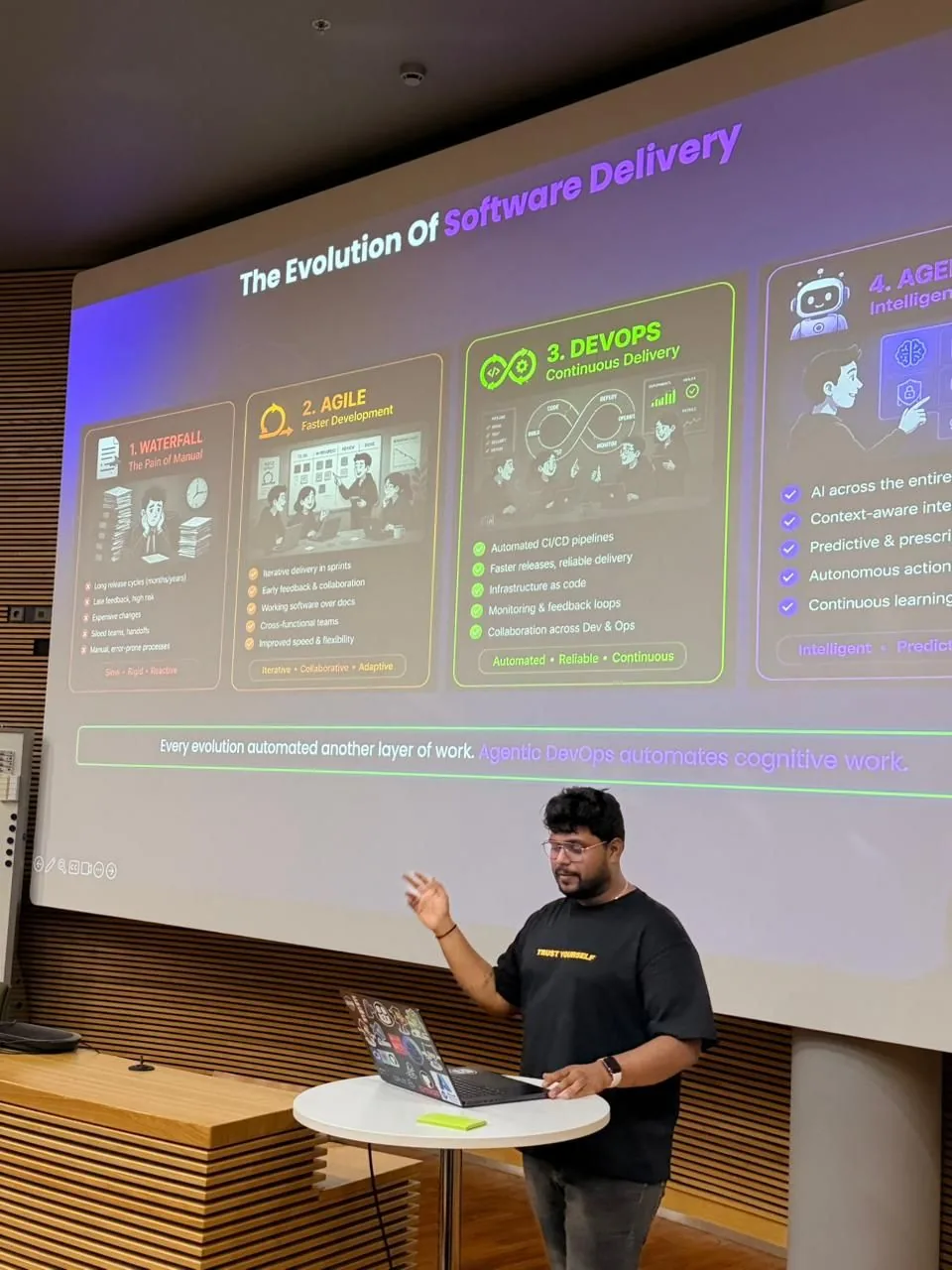
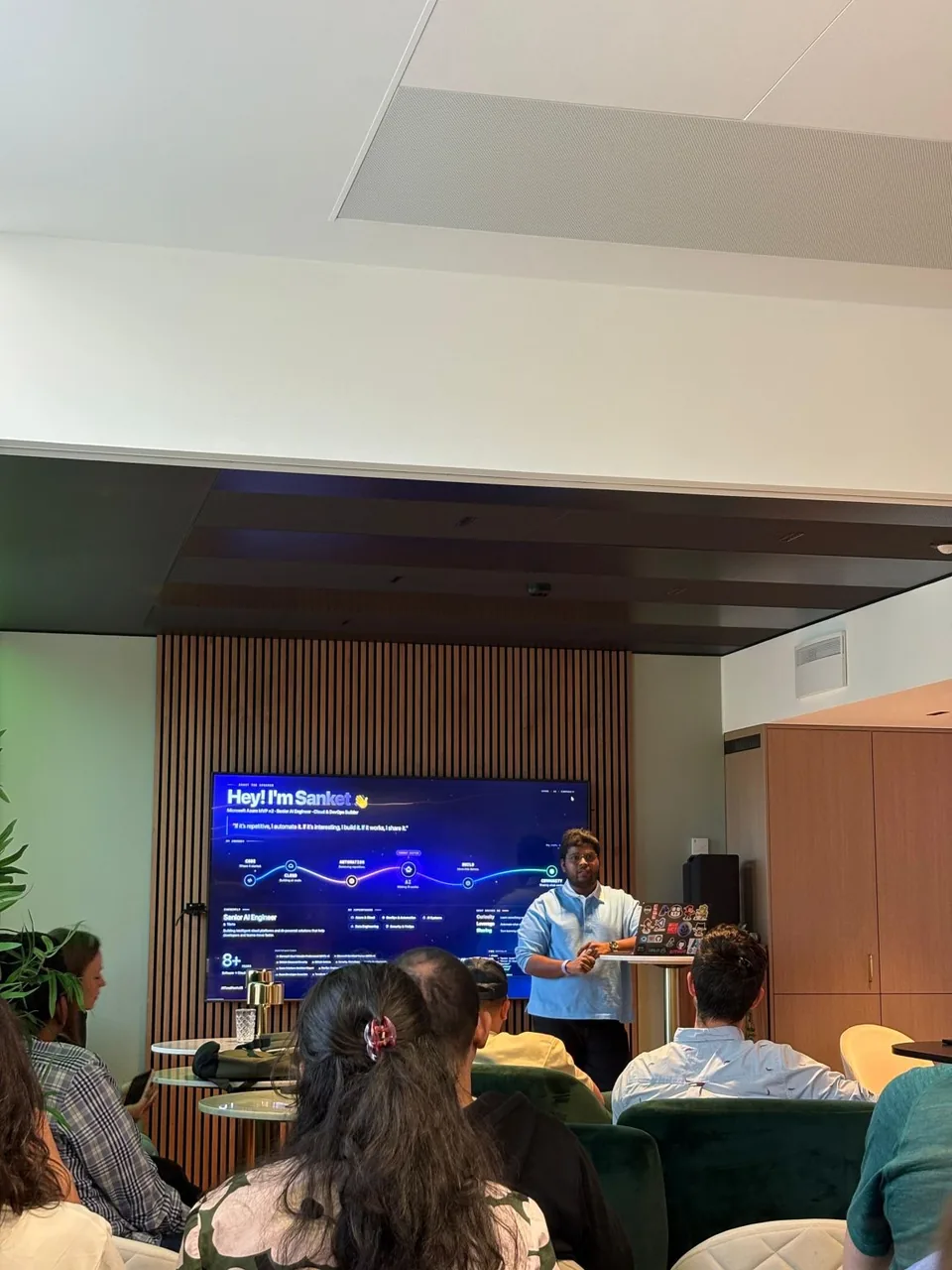
Sanket presenting “The Evolution of Software Delivery” at Microsoft Agentic AI & DevOps Days

Speaker

Microsoft Agentic AI & DevOps Days

Co-presented Agentic DevOps

Co-presented Agentic DevOps, demonstrating GitHub Copilot agents, Work IQ MCP, Microsoft Foundry agents, and GitHub Actions across planning, coding, deployment, and incident response.

  • GitHub Copilot Agents
  • Work IQ MCP
  • Microsoft Foundry
  • GitHub Actions
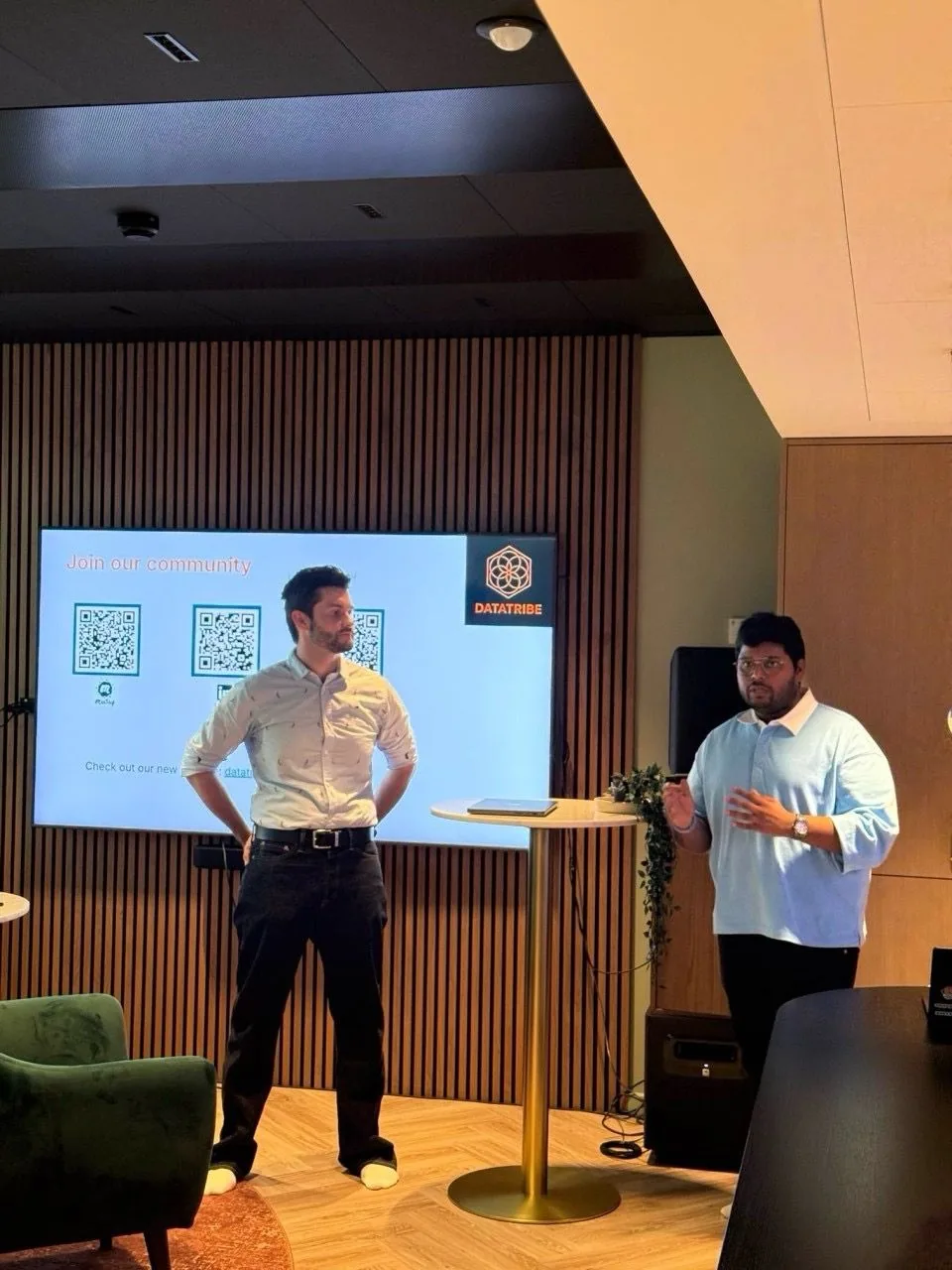
Sanket opening his talk to the audience at DataTribe Collective, HelsinkiSanket (right) on stage at DataTribe Collective, Helsinki

Speaker

DataTribe Collective, Helsinki

Production AI with Microsoft Foundry

Discussed how Microsoft Foundry simplifies production AI adoption compared with building and managing a full open-source stack, covering prompt management, evaluation, guardrails, and observability with Langfuse and LiteLLM.

  • Microsoft Foundry
  • Langfuse
  • LiteLLM
  • Prompt Management
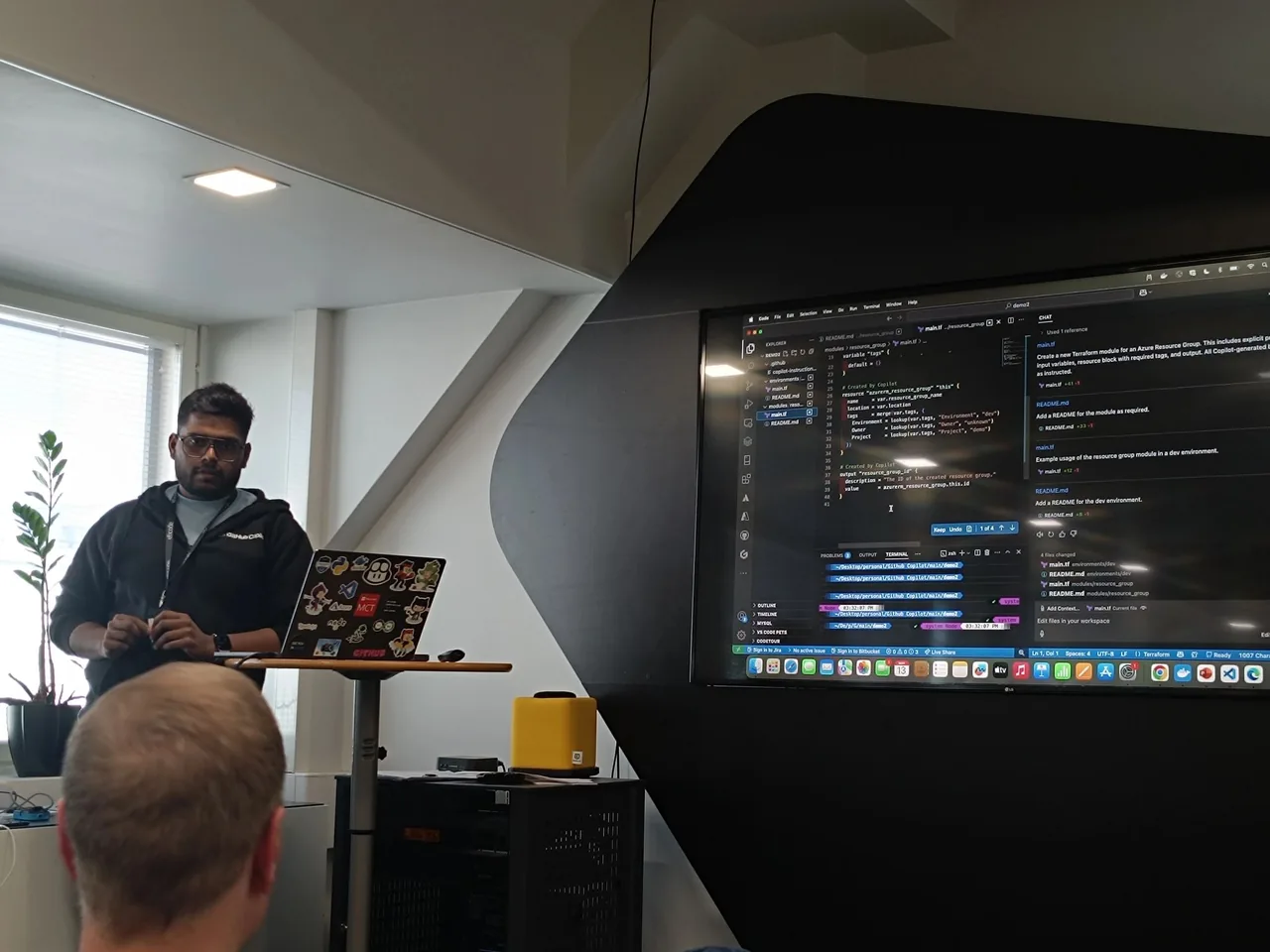
Sanket presenting at Microsoft DevXperience, with GitHub Copilot writing a Terraform module on the screen behind him

Guest speaker

Microsoft DevXperience

BYOK for GitHub Copilot

Presented Bring Your Own Key (BYOK) security and custom model integration with GitHub Copilot to enable secure, tailored enterprise AI-assisted development.

  • GitHub Copilot
  • BYOK
  • Custom Model Integration
  • Enterprise Security

In code

Open source

# Azure Multi-Client Manager (AZM)

# Cross-platform CLI for Azure identities · Bash + PowerShell

  • Isolates each client’s Azure session
  • Detects expired logins
  • Compares environments
  • Reduces cross-tenant risk
Built a cross-platform CLI using Bash and PowerShell to isolate Azure client sessions, detect expired logins, compare environments, and reduce cross-tenant operational risks.
  • Bash
  • PowerShell
  • Azure CLI
  • Cross-Platform
AZM on GitHub (opens in a new tab)

In writing

All articles

One to one

Mentoring on Topmate

Ranked in the Top 1% Club of Experts and received People’s Choice and Community Leader recognition for mentoring professionals in AI, Azure, and Cloud Architecture.

Book a session(opens in a new tab)
  • Top 1%
  • People’s Choice
  • Community Leader

Let’s talk

The next chapter starts with a conversation.

Need an architect for an Azure or AI project, a mentor for your next step, or a speaker for your event? Tell me what brings you here, and write me a first message right on this page.

What brings you here?

Architecture and AI work

Advice, architecture workshops and proofs of concept for Azure platforms and AI agents. Tell me the problem and where you are today.

ToSanket Joshi <joshisanket097@gmail.com>

SubjectArchitecture or AI work

Hi Sanket,

What are you building, and where are you stuck?

I’m from .

Thanks,your name

Nothing is sent from this page: it opens your own email app or WhatsApp with the message ready.

Mentoring and career advice

One-to-one sessions on AI, Azure and cloud architecture careers. Sessions are booked on Topmate, where you pick a time that suits you.

A talk at your event

I’ve spoken about agentic DevOps, production AI and GitHub Copilot at Microsoft Agentic AI & DevOps Days, DataTribe Collective Helsinki and Microsoft DevXperience.

ToSanket Joshi <joshisanket097@gmail.com>

SubjectSpeaking invitation

Hi Sanket,

Tell me about the event: the date, the audience and the topic you have in mind.

I’m from .

Thanks,your name

Nothing is sent from this page: it opens your own email app or WhatsApp with the message ready.